People & Leave
Employee leave, absence tracking, statutory pay, HR compliance, and managing people without a full HR team.
Accounting
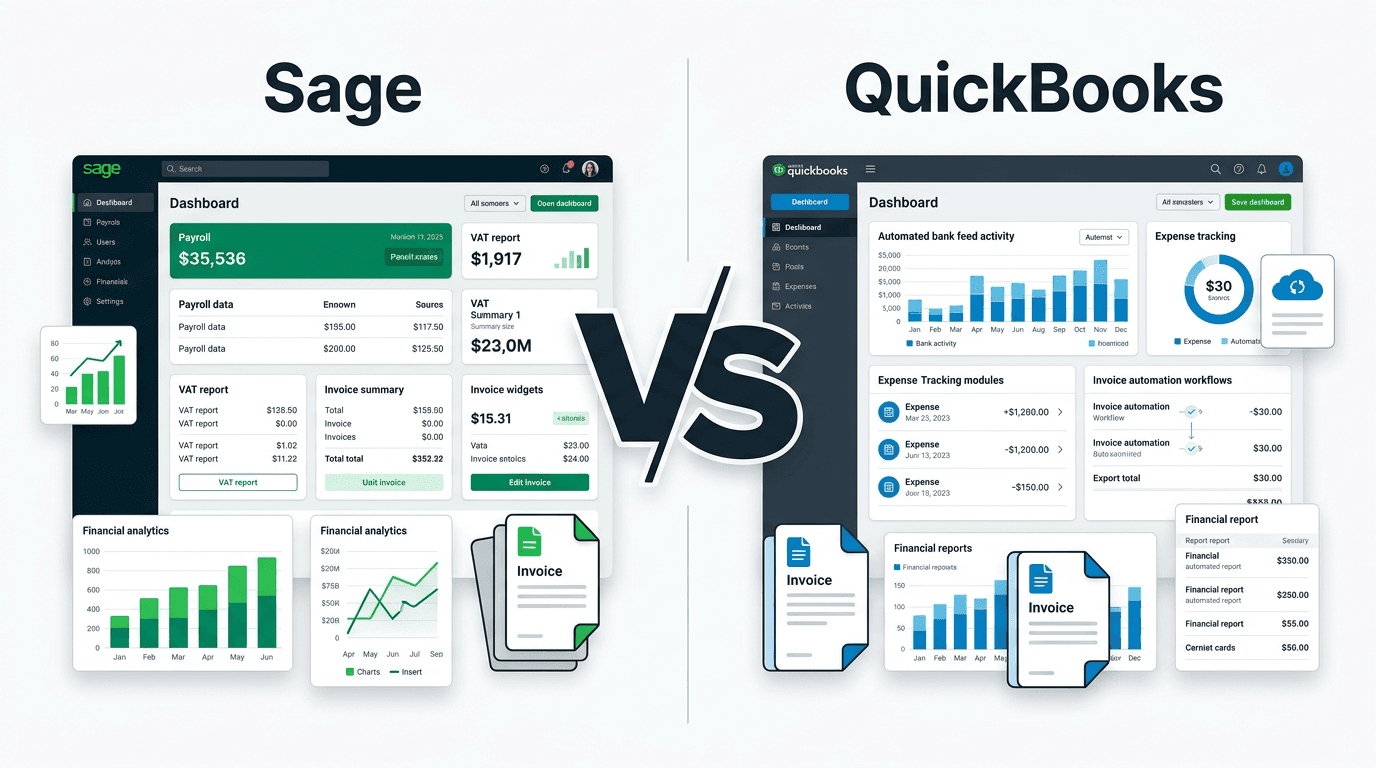
Sage vs QuickBooks: Which One Actually Saves You Money in 2026?
Sage and QuickBooks both handle invoicing, VAT, and bank reconciliation, but they differ sharply on payroll, pricing structure, and long-term costs. QuickBooks is cheaper at entry level — £10/mo vs Sage's £18/mo — and offers multi-currency from £33 vs Sage's £59. But Sage pulls ahead on integrated payroll, CIS at a lower tier (£39 vs £47), Sage Copilot AI, UK-native phone support, and pricing stability. QuickBooks has raised prices 12–17% annually since 2023, while Sage has stayed more predictable. A 10-employee business on QuickBooks pays roughly £75/mo (accounting + payroll add-on), while Sage achieves the same for less with tighter integration. QuickBooks wins on budget entry, 750+ integrations, inventory features, and weekend support hours. Choose Sage for payroll depth and compliance. Choose QuickBooks for the cheapest starting price and the broadest app ecosystem.
Editorial Team · 15 Mar 202613 min read
Accounting
Why Your Profit and Loss Report Looks Wrong (And What's Probably Causing It)
A wrong-looking P&L is rarely one big mistake — it's usually a combination of quiet errors that accumulate over time. The most common causes are misallocated expense categories (which distort individual lines without changing the total), missing transactions from bank fees or unconnected payment channels, timing errors from mixing cash and accrual accounting methods, personal transactions mixed with business expenses, one-off costs like annual subscriptions recorded in a single month instead of spread across twelve, inconsistent income recording, and misreported payroll or owner compensation. The fastest way to audit your own P&L is to compare month-to-month figures, check the largest categories first, drill into anything that spikes or drops unexpectedly, and reconcile your bank account. Regular weekly bank reconciliation is the single most effective prevention measure.
Editorial Team · 1 Mar 202615 min read